
Handboek Bomen 2022: The Practical Guide for Municipalities
Handboek Bomen 2022 is the standard for tree management in the Netherlands, and municipalities cannot ignore it. In this practical guide, we translate the technical handbook into actionable insights for green space managers and policy officers.
What is Handboek Bomen 2022?
Handboek Bomen is a collection of standardized quality requirements, guidelines and standards for all tree-related work in public spaces. From pruning to tree safety inspections, from growth site development to valuation, the handbook describes what professional tree management looks like.
For municipalities, the handbook is not optional advice. Approximately three-quarters of all Dutch municipalities now use the tools from Norminstituut Bomen. The handbook serves as the basis for tenders, contract specifications, municipal tree policy and substantiation of duty of care in legal claims.
Handboek Bomen is published every four years by Stichting Norminstituut Bomen, founded in 2012 and based in Gouda. The current edition contains 20 chapters covering all aspects of professional tree management.
Key changes compared to 2018
The biggest shift in Handboek Bomen 2022 is the emphasis on tree crown volume (BKV) instead of tree counts. Where 'planting 100 trees' was previously considered successful, the new handbook looks at how many cubic meters of crown those trees provide. This is a fundamental course change in how we measure the value of our urban green.
One mature tree with a crown volume of 1,000 m³ provides more ecosystem services, CO₂ absorption, cooling, water retention, than ten young plantings combined. The handbook therefore states: protecting existing trees has an immediately more sustainable effect than planting young trees. For municipalities, this means tree value tables are now primarily based on crown volume, and management plans must focus more on preserving mature specimens.
In addition to this content shift, the 2022 edition contains three completely new chapters. Chapter 18 covers growth site research with guidelines for assessing above-ground and below-ground growing conditions. Chapter 19 introduces methods for quality assessment of completed work. And Chapter 20, Tree Balance, focuses on ecosystem services and the contribution of trees to climate adaptation. The tree value and tree damage index tables in Chapter 15 have also been completely revised.
Duty of care: what does this mean for your municipality?
The duty of care for trees is based on Article 6:162 of the Dutch Civil Code. As a tree owner, you must demonstrate that you have taken sufficient care to prevent damage. Handboek Bomen distinguishes three levels of duty of care that determine how intensively you must inspect and what measures you should take.
The first level, general duty of care, requires periodic visual inspections plus taking necessary measures. For regular trees, an inspection cycle of three to five years typically applies. For trees with elevated risk, such as specimens along busy roads, near schools and playgrounds, or monumental trees with limited life expectancy, heightened duty of care applies with annual inspection. The third level is the investigation duty: when a visual inspection identifies visible defects, further investigation is required, for example, residual wall thickness measurements or tomographic examination.
Inspection frequency depends on tree type and location. Young trees at locations with low hazard exposure are inspected every five years, with high hazard exposure every three years. Semi-mature trees require three-yearly to annual inspection depending on location. Mature trees and attention trees are inspected annually to every three years. These are guidelines, you determine the actual frequency based on the specific situation.
Documentation is essential for demonstrating duty of care. For each tree, you record location, tree species, inspection date, identified defects, safety class (A/B/C/D), recommended measures, urgency, and supporting photos. Without this registration, you cannot prove you met your duty of care when claims arise. The well-known Zutphen Tourist Boat case from 2015 demonstrates that not following expert advice leads to liability, especially at busy locations.
Tree Safety Inspection (BVC) in practice
A tree safety inspection according to Handboek Bomen follows a structured workflow that begins with planning and ends with follow-up. The first step is determining which trees will be inspected based on inspection frequency, previous findings, and location risk.
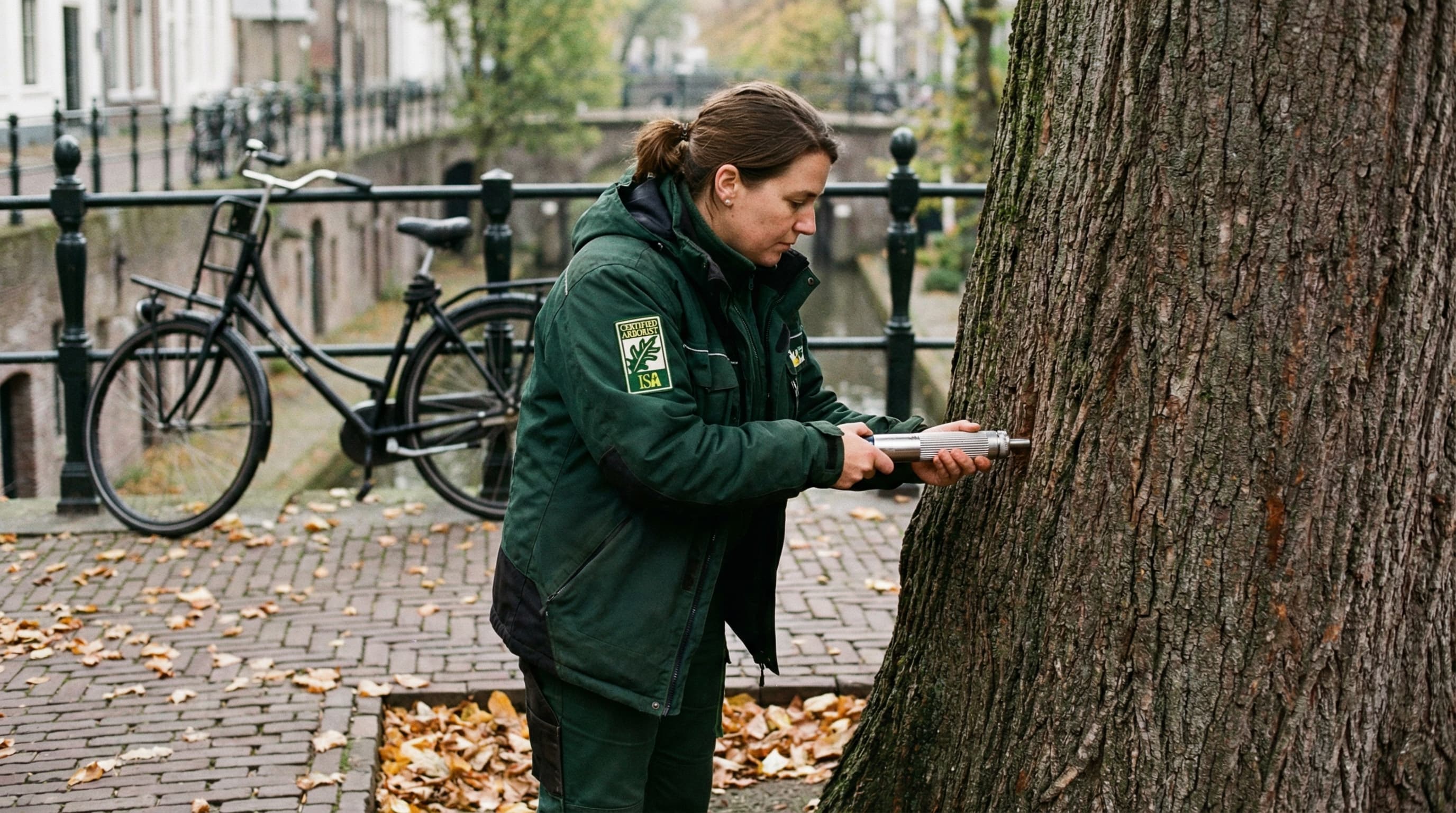
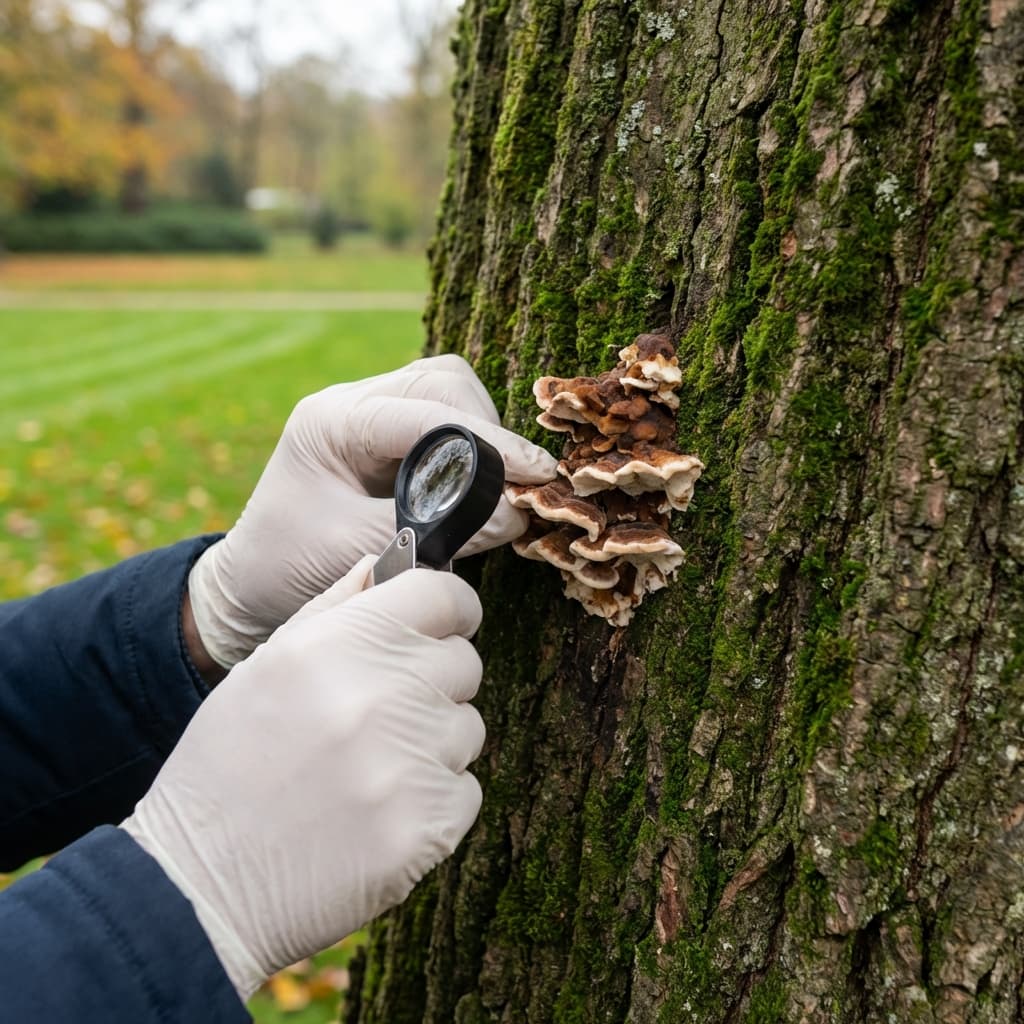
During the visual inspection, a certified inspector assesses on site the general vitality, structural integrity, presence of cracks, fractures, cavities, dead wood, fungi, and mechanical problems such as tilting or root lift. After inspection, each tree receives a classification: from 'no elevated risk' to 'further investigation required' or 'felling necessary'. All findings are recorded with photos, defects, urgency, and recommended measures. Finally, follow-up actions are scheduled based on urgency classes.
Handboek Bomen uses five urgency classes for follow-up actions: acute (immediate action required, such as emergency felling), within one month (urgent action needed), within three months (short-term), within six months (planned approach), and within twelve months (regular planning). This classification helps municipalities deploy scarce maintenance budgets effectively where urgency is highest.
Digitalization: from paper to smarter tree management
Handboek Bomen 2022 sets explicit requirements for data registration. It contains a 'Data Passport' describing which data must be recorded per tree, linked to the Data Inspector Trees (DIB) certification. This standardization enables data sharing between municipalities, contractors, and consultancies.
The performance of digital systems versus paper processes is now well documented. Where paper workflows have an error rate of around 15% and cost about 8 hours per inspection round, digital systems achieve less than 1% errors and about 2 hours per round. Photos are automatically linked to the correct tree and inspection, and reports are available in real-time rather than manually compiled afterwards.
Papieren processen
Error rate ~15%, throughput time ~8 hours, manual photo linking
Digitale systemen
Error rate <1%, throughput time ~2 hours, automatic photo linking
Modern tree management software helps municipalities meet Handboek Bomen requirements through structured registration compliant with data standards, automatic linking of safety classes to follow-up actions, urgency management with automatic reminders, and reports for accountability to management and insurers. The investment pays for itself in efficiency, but more importantly: in legal certainty when it matters.
Preview: Handboek Bomen 2026
In December 2025, Norminstituut Bomen completed the validation of Handboek Bomen 2026. The launch is scheduled for the National User Day in Den Bosch, expected in May 2026. This means municipalities have several months to prepare for the new standard.
The most significant change is structural: the handbook will be split into two parts, a main document with standards, guidelines, and result obligations, and a separate part with explanations and illustrations. This makes the handbook more readable and user-friendly. Content-wise, the National Tree Standard developed in 2024 will be integrated, with guidelines such as Cecil Konijnendijk's 3-30-300 rule for tree crown coverage. EuroTrees will also be introduced: a new methodology to calculate the exact value of trees in euros, useful for damage calculations and investment justification.
Don't wait until the launch to prepare. Inventory now whether your current data structure meets the 2022 requirements, then you'll be well prepared for 2026. Check whether all trees have been inspected within the required frequency, and start mapping tree crown volume as this is becoming increasingly important. Also ensure your inspectors have current DIB certification, as this certification remains the standard.
Related Topics
Explore more aspects of professional tree management:

Getting started with Handboek Bomen
Handboek Bomen 2022 requires a systematic approach to tree management. Want to know how other municipalities organize their tree safety inspections? Or discover how tree management software can help you work more efficiently and better comply with the Handbook?
Free consultation • View your own data • Completely non-binding