Outsourcing tree inspections: keep sight of the round
Whoever outsources the tree safety inspection often hears little until the delivery. This practice scenario shows how the round runs when your contractor's inspectors work in your tree inventory: you see the progress per day, and a risk tree is with you on the day it is identified. It describes practice in the Netherlands, where the inspection is called the BVC (boomveiligheidscontrole).
6 min read
The situation: the round is running, and you do not know how far it is
You have outsourced the BVC (boomveiligheidscontrole, the Dutch tree safety inspection). The arboricultural consultancy or the grounds maintenance contractor has the assignment, the inspectors have started, and then it goes quiet. You know work is being done. You do not know where, how many trees are finished, or whether the round is on schedule.
The answer comes when you phone, or when an interim file arrives, sometimes weeks later and in a format of its own. In the meantime the alderman asks how things stand, a resident reports a branch over the cycle path, and a colleague wants to know whether their district has been done yet. You say you will ask.
That is not down to the contractor. It is down to the form: they work in their system, you in yours, and in between there is a delivery at the end. In IDA Bomen your contractor's inspectors work in your tree inventory, and you see every inspected tree at the moment it is recorded.
Outsourcing the tree inspection: what goes and what stays
A tree safety inspection, in practice still often called a VTA inspection (after Visual Tree Assessment) or a boominspectie (tree inspection), is work a specialised firm does well. The inspectors are trained, they walk rounds all year, and your own team keeps time for management.
You do not outsource the responsibility with it. The municipality remains the owner of the trees, and the duty of care stays with the owner. That means you have to know what was found, and that you have to act on it. A risk tree that was identified in March and reaches you in June has stood for three months without anyone in charge of it knowing.
There is more on the specification, supervision and settlement in the article on working with your contractor.
The inspection round as a project in IDA
Choose the trees
Select on the map what is inspected this year: a district, the trees along main roads, or everything whose previous inspection was longer than a certain time ago.
Turn it into a BVC project
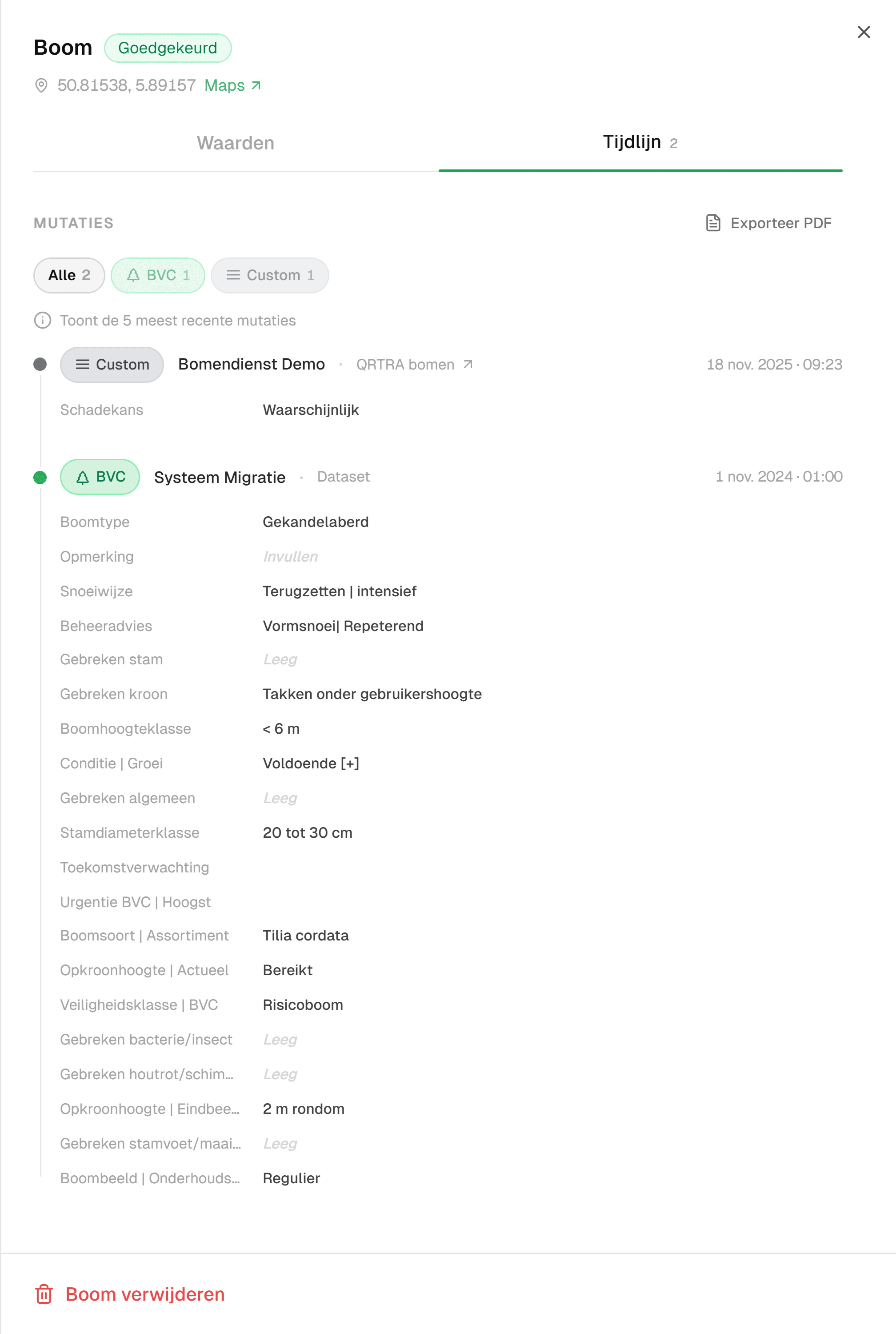
The project comes with the BVC form, with the classes and terms your inspectors know: Veiligheidsklasse (safety class), condition, defects, urgency, management advice.
Give the contractor access
You give access per project, to one inspector or to the contractor's whole organisation. They see their own projects and nothing else of your inventory.
The inspectors work on their phones
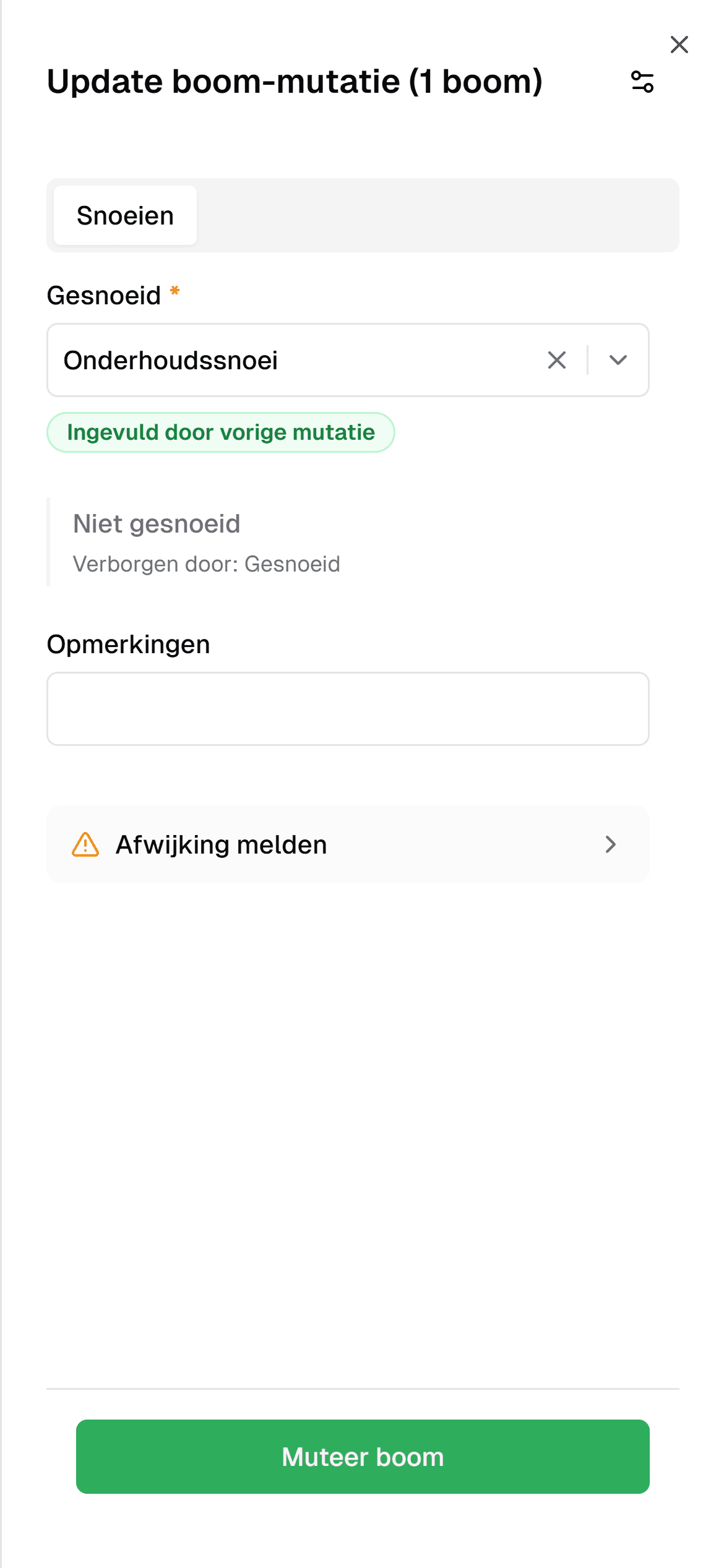
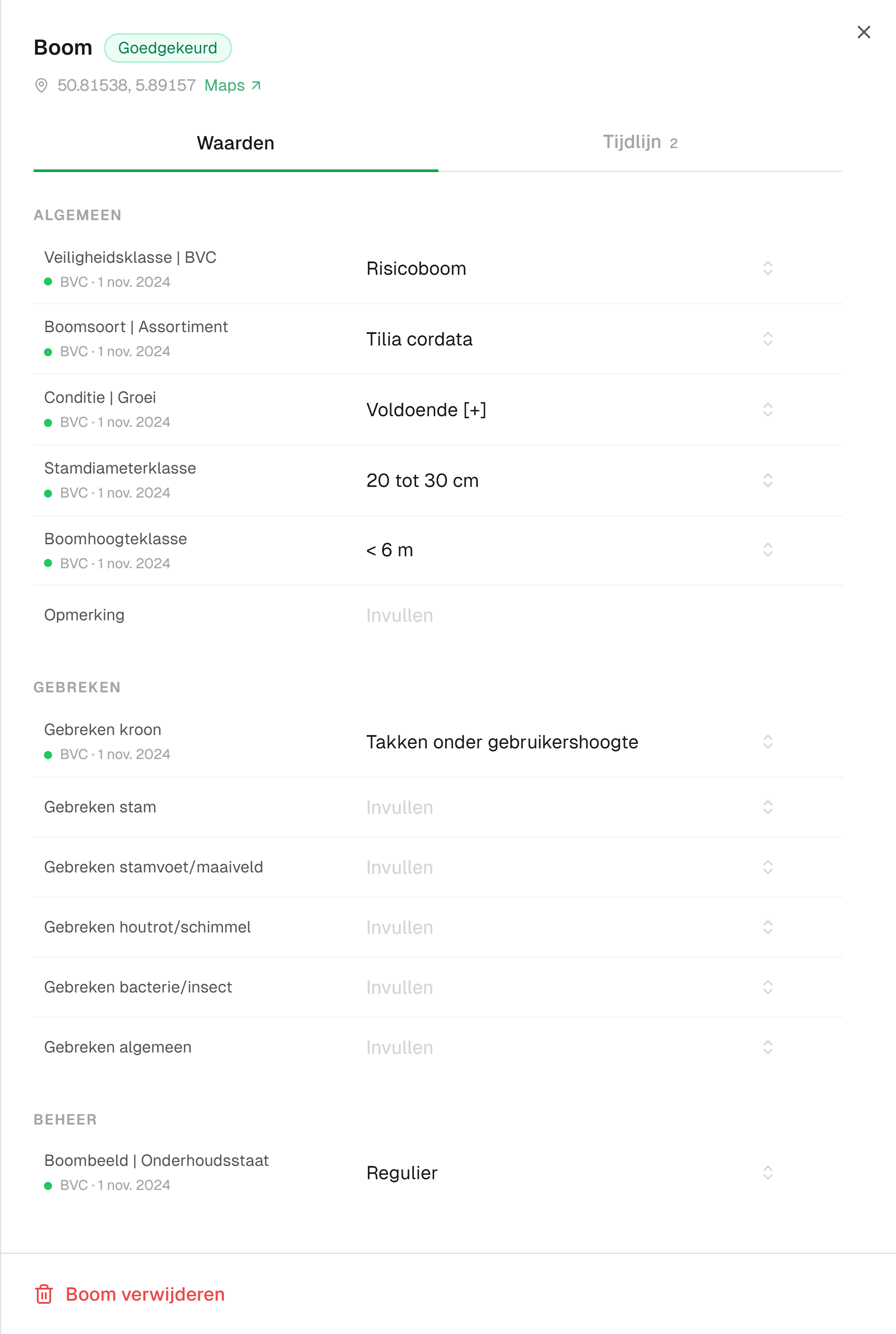
The field app is a web app, without installation. The inspector sees the trees of the project on the map with their own position, taps a tree and opens the form. The values of the previous inspection are already filled in, photos come straight from the camera.
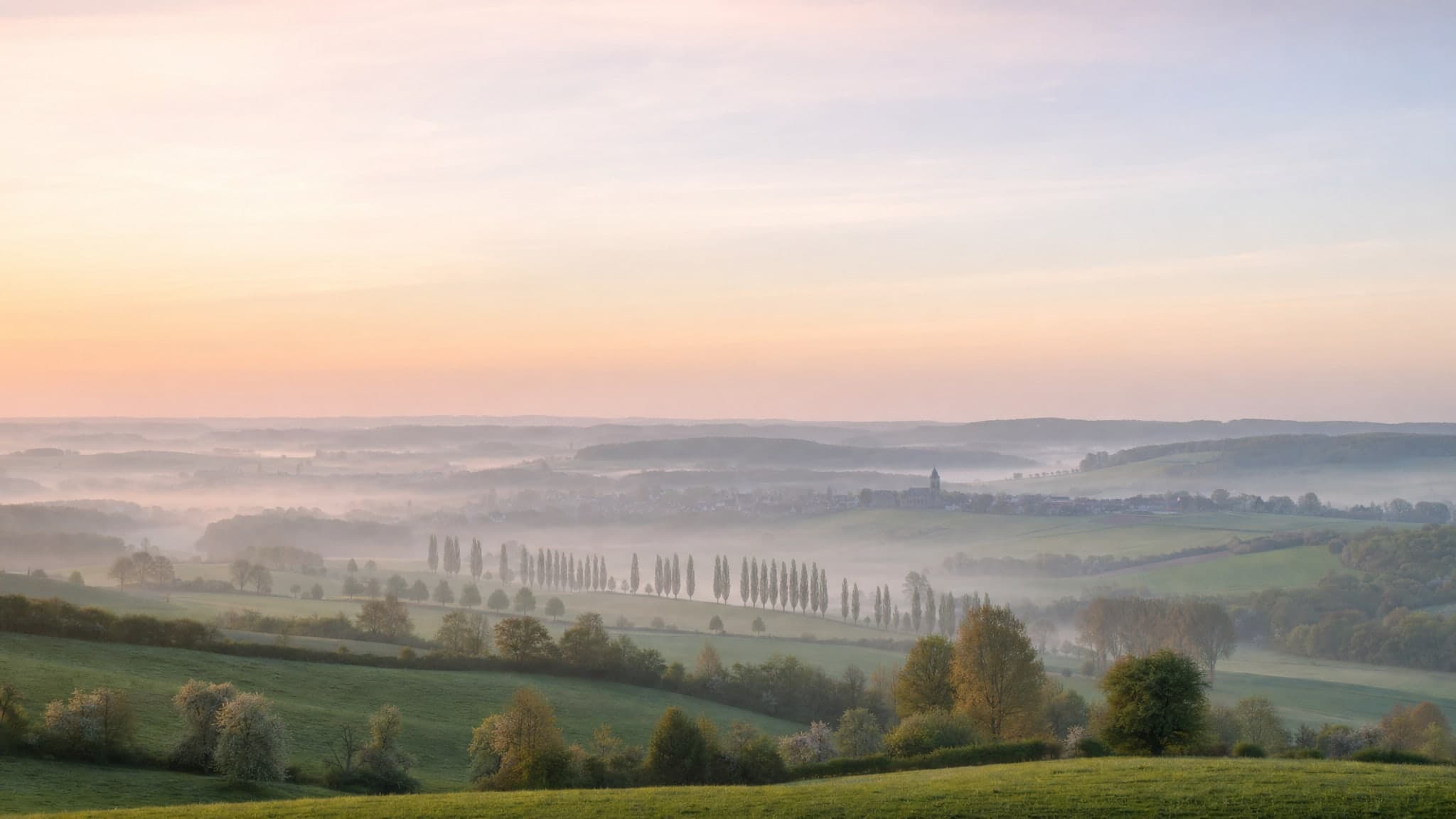
The form thinks along. You see the questions that belong to this tree, and what is mandatory cannot be skipped. That saves the inspector time and saves you a round of questions afterwards.
Seeing progress without phoning
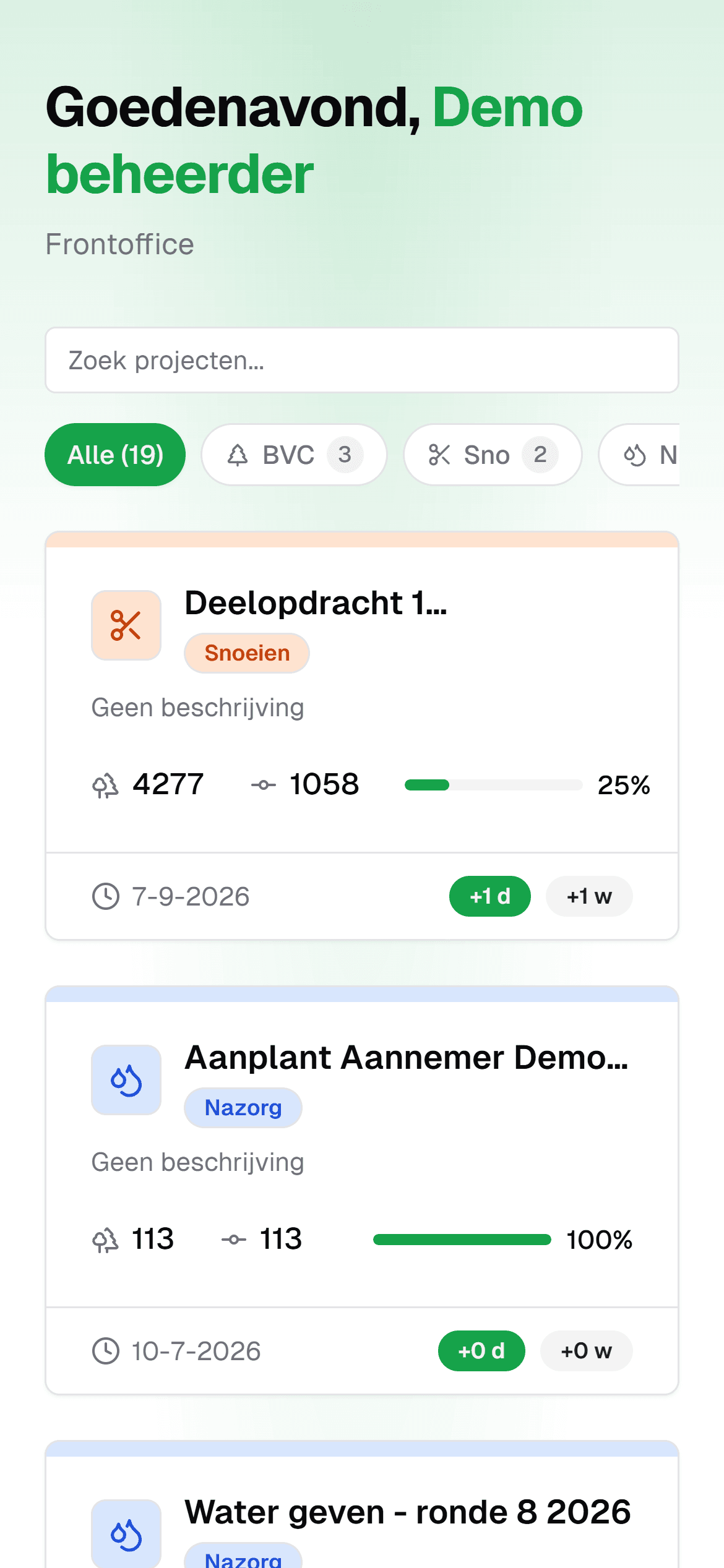
Every record is in the project at once. The project map shows the progress with it: how many trees have been inspected, how many are still to go. The charts show how the pace develops, how much each inspector records and how many days the round still takes if it carries on like this.
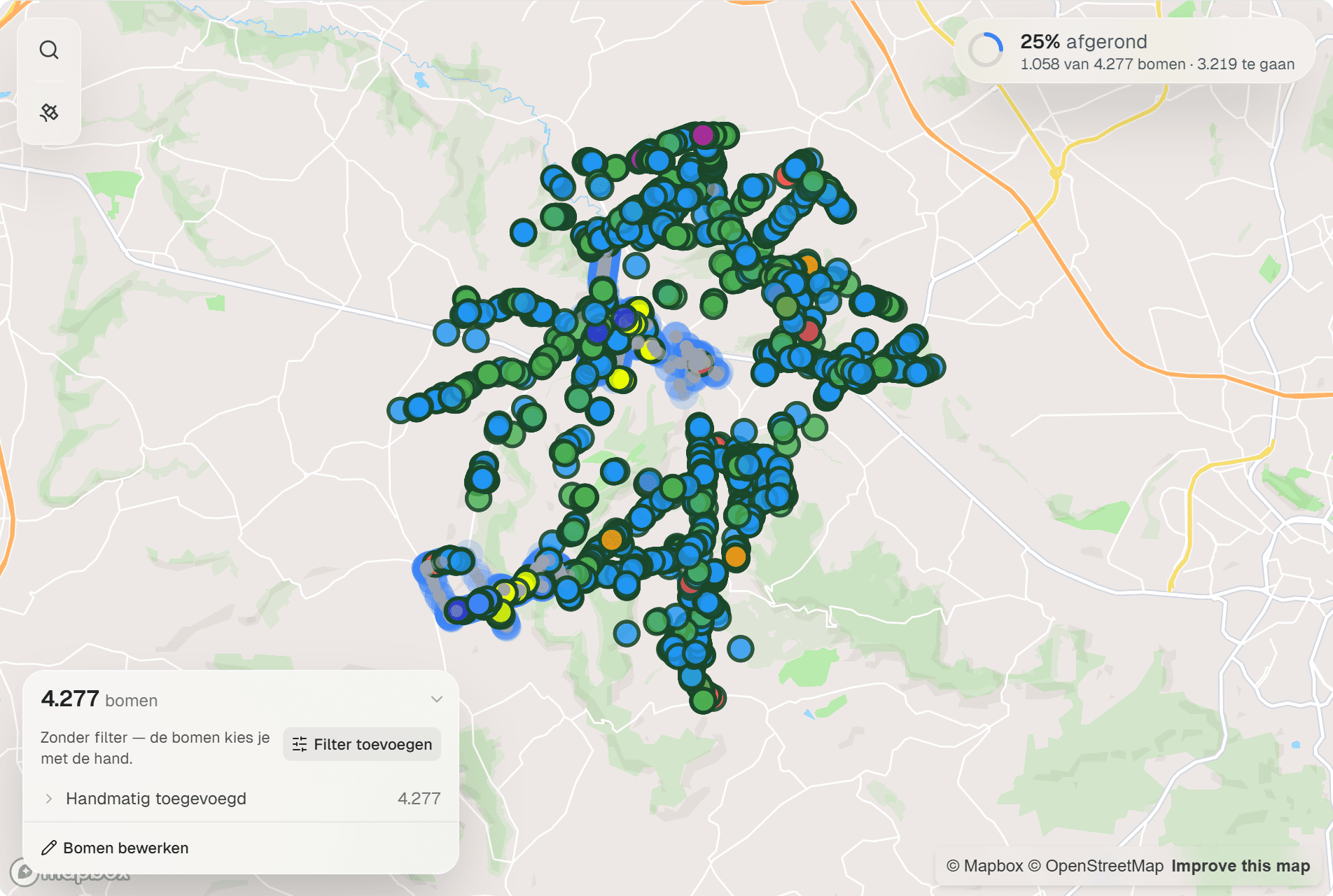
If the alderman asks how things stand, you open the project. North is done, the centre is running, south starts next week. If several rounds and projects run at the same time, they sit together in the planning, with per project the expected and the actual dates and the organisation working on it.
A tree the inspector cannot assess, gets a status, such as "Tijdelijk niet bereikbaar" (temporarily out of reach) or "Nader onderzoek nodig" (closer examination needed). So it does not silently disappear from the list, and you see which trees still need a follow-up.
Acting at once on what is found
The greatest difference is not in the progress, but in the outcome. A risk tree with a high urgency is in your inventory on the day it is identified, with photos. You do not have to wait for the final report to plan a measure for it. You filter on the Veiligheidsklasse and the urgency, and turn those trees into a pruning or felling project, while the round is still running elsewhere.
If the inspector sees something outside that differs from what the inventory says, a different species or a different height class, they report it as a deviation, with a photo. A tree that is no longer there is recorded as not found. That report arrives in your queue. You review it, and what you approve goes into the inventory. That way your tree inventory gets better with every round, and you keep the final say over what is in it.
What you have in hand after the round
At the end there is no delivery left that you have to import, compare and correct. The round is already there: per tree the inspection, with date, inspector, outcome and photos, in the tree's timeline. That is also your proof if a question about one tree comes later, as in the practice scenario on the tree dossier for a damage claim.
The data is yours and stays yours, also when the contract ends and another firm does the next round. The new inspectors start with the outcomes of the previous round already in their form. And if you want to use the results somewhere else, you export the project to the common GIS and Excel formats.
It is simpler for the contractor too. Their work is their report: what has been recorded has demonstrably been done, with date and photo. No interim files, no discussion afterwards about which trees have been done.
Frequently asked questions
Yes. Many Dutch municipalities have the BVC, the Dutch tree safety inspection, done by an arboricultural consultancy or a grounds maintenance contractor with trained inspectors. The responsibility for the trees stays with the owner. So agree that the outcome per tree goes into your inventory, on the day of the inspection. In IDA Bomen the inspectors work directly in your tree inventory.
The owner of the tree, so the municipality. The contractor is responsible for the quality of their inspection, but the duty of care does not transfer with it. So you have to know what was found and act on it. That works when the findings reach you quickly and per tree.
By having the round recorded in a system you can look into yourself, instead of waiting for a file afterwards. In IDA Bomen the round is a project: you see on the map how many trees have been inspected, how much each inspector records and how many days the round still takes if the pace holds.
Your contractor's inspectors work in your environment of IDA Bomen, with access to the projects you share with them. The field app is a web app for phone and tablet, without installation. They log in and see their projects on the map.
VTA stands for Visual Tree Assessment, the method of visual assessment the inspection is based on. BVC, boomveiligheidscontrole, is the name of the inspection as it is carried out and recorded in the Netherlands. In practice the words are used interchangeably, as is boominspectie (tree inspection). IDA Bomen uses the term BVC, with the classes your inspectors know.
Read on
Outsourcing tree maintenance: working with a contractor
Outsourcing tree maintenance to a contractor: what goes in the specification, how assignment, report back and settlement run, and how to handle deviations.
7 min read
What is a tree safety inspection (BVC)?
A tree safety inspection (BVC in Dutch) is the visual check of a tree for defects that pose a danger. What you assess, record and follow up, and why.
4 min read
Tree dossier for a damage claim: what to show
A damage claim after a tree blows over: the insurer asks whether it was inspected. What you have to show, and how the tree dossier in IDA Bomen gives it.
6 min read
See your own tree inventory in IDA
Send us your tree inventory, as a shapefile, an Excel list or whatever you have, and we will show IDA on your own trees, from your own file to the approval of field work.
Used by